Although not all couples want a religious wedding ceremony, most do want to include some traditions. While you can include customs from your own background, you can also incorporate some beautiful Hawaii wedding traditions to create a perfect blend. How does exchanging fragrant flower garlands under a golden sunset sound, with the raw spirit of the islands weaving into your civil vows? We love helping couples blend Hawaii’s vibrant culture into simple, legal ceremonies that feel deeply personal.
It’s not uncommon for us to see mainland folks light up when they add some of these typically Hawaiian touches. This is a fantastic way to honor the land without any spiritual strings attached.
Want to learn how you can make it happen? Let’s find out.
The Lei Exchange
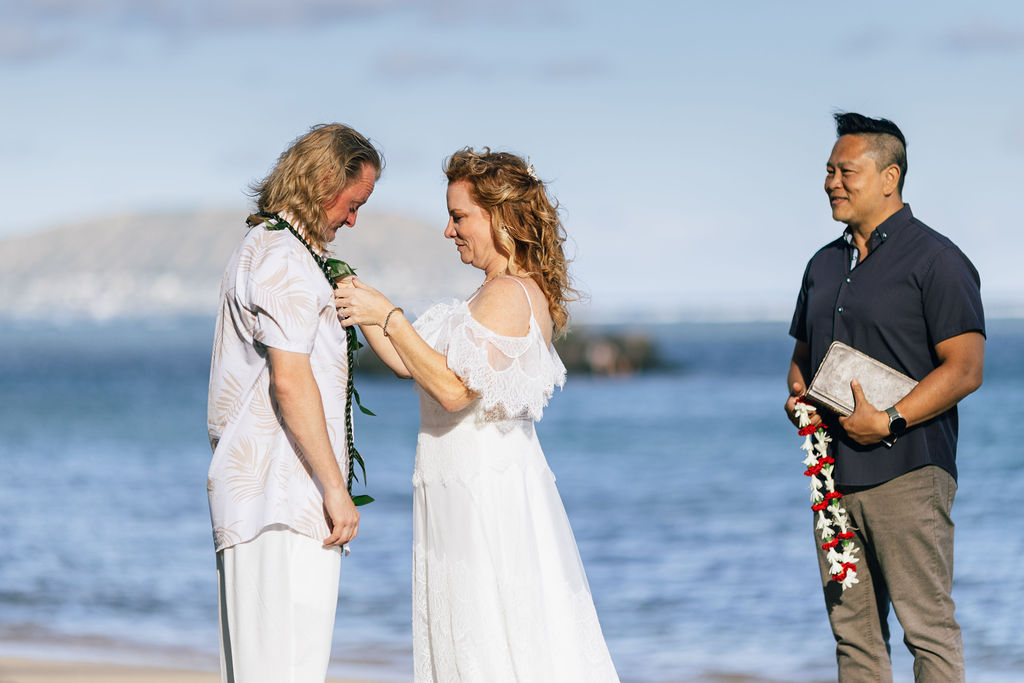
We always suggest kicking off with leis because not many may know that these aren’t just pretty necklaces. They’re a hands-on way to say “you’re mine forever” in true Hawaiian style. You’ll want to pick fresh ones made from pikake or maile leaves. The Hawaii wedding tradition is that the groom slips one over the bride’s head first, and then she does the same. As you do it, look into each other’s eyes and share a quick promise. “With this lei, I give you my heart and our shared path ahead.”
You should tie the ends together, which looks like a knot binding your hands. It’s best to get leis from local growers. Couples share that this tradition beats a ring exchange every time. And the best part is that there is no need to explain the meaning because the islands do that for you.
Blowing the Conch Shell
Nothing sets the tone like a deep, resonant pu blow, and that’s the conch shell call. This is done by your officiant grabbing a polished pu and sounding it toward the sea, the mountains, the sky, and the earth. It’s a way to clear the air and signal to everyone and the universe that your ceremony starts now.
It’s a sound that honors the winds that carried us here together. This Hawaii wedding custom is quick, but guests gasp every time. We’ve done it at Keehi Lagoon with the lagoon echoing back. And if you want to try it yourself, practice the breath to make sure you’re doing it right.
Lauhala Mat
Lay down a woven lauhala mat from hala leaves, which feels soft underfoot and is also symbolic. You both step onto it from opposite sides, signifying that you leave your old single lives behind. The simple explanation is that the mat represents the ground you’ll walk together from this day on. No blessings are needed because it’s all about unity and the earth’s support. Some couples can frame theirs as a home reminder.
Barefoot on Sacred Ground
This is another of the Hawaii wedding traditions that you may like. Ditch your shoes and go barefoot to feel the sand, grass, or stone. Hawaiians see it as humbling to the ‘aina, the land, because it grounds you in the moment. It’s a way to pay your respects without words.

Maile Cord Handfasting
Twist a maile lei into a cord and loop it loosely around your joined hands. The officiant usually says that the green vine of peace wraps the couple’s commitment in a tight embrace. It represents enduring respect while you tug it gently to seal it.
Why not use Freshmail for Aiea Loop ceremonies? It’s fragrant and flexible for any size crowd. Solo travelers adore it because no one else is required. A good idea is to hang the cord on your wall later as a keepsake, blending old island vibes with modern simplicity.
Blow a Feather or Pour Sand
Forget fused sand from the mainland and go Hawaiian with a feather blessing. You will use a soft white feather, which your officiant will pass between you, each of you holding it briefly before releasing it to the breeze. The meaning of this is to carry away doubts and welcome harmony.
You can also pour ti leaf sand if you prefer a hands-on approach, which symbolizes protection. Mixing two colors into one bowl signifies the blending of your lives. The saying is that as these sands join, so do your journeys. It’s short, sweet, and a visual pop for photos.
Hula Dancer
Why not hire a hula dancer for a two-minute performance at your Hawaii civil wedding? Have a quiet one, telling your story, how you met, or your first trip here. The dancer moves gracefully with ukulele strums while you watch, hand in hand.
It’s a great way to keep the energy high without words. Brides sometimes like to learn a simple step themselves, and guests simply love it. It perfectly ties into the islands’ storytelling heart.
Salt Water Wash
Right before you exchange your vows, dip your hands in a bowl of sea salt, then rinse them together under fresh water. The symbolic meaning is washing away past baggage and preparing you for clear-headed promises. It’s a quick ritual, but it sure is refreshing in the heat and pairs well with lauhala mats.
Local Music and Oli Chants
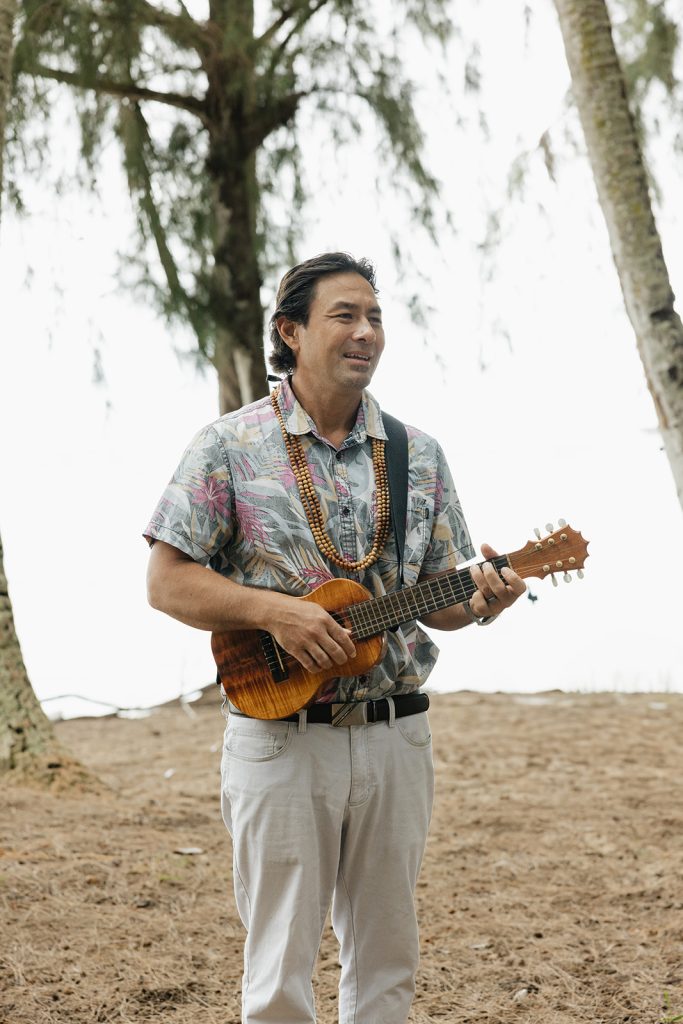
Ukulele strums or ipu drum beats are definitely among the best Hawaii wedding traditions, loved by many couples. Play soft Hawaiian melody during seating, while for the “chant,” use a rhythmic oli poem about love and sea, which your officiant can recite neutrally, ”Waves meet shore endlessly, like our bond.”
Tips for Solo Travelers and Tiny Elopements
If you’re traveling alone to elope, rest assured that all these Hawaiian wedding customs work beautifully with just you and the officiant. The lei exchange, for instance, doesn’t require a crowd because it’s an intimate moment shared just between the two of you. Similarly, the pu shell blow creates a deep, powerful sound that resonates even in a solo ceremony, calling in the spirit of the islands. The feather blessing floats freely in the breeze, symbolizing peace and harmony in your union.

Conclusion
The best way to do this is to weave traditions around personal words. Hawaii’s air hums with aloha, and these touches capture it in a secular way. A couple enjoys every moment and treasures the memories. So, when planning your special day, consider how you would like to incorporate Hawaiian wedding traditions into your ceremony.
If you are ready to plan your dream day, feel free to check out our Locations and Wedding Services pages, and fill out our contact page. For more ideas, browse our blog!